The ARRL Solar Update
Solar activity is expected to be low in the coming days, according to NOAAís Space Weather Prediction Center, with a chance for M-class
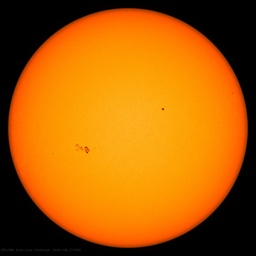
flares and a slight chance for stronger X-class flares associated with sunspot region 4566, which is showing rapid growth in both size and magnetic complexity. No Earth-directed coronal mass ejections have been observed. Sunspot numbers are increasing from a low of zero last week. Region 4564 continues to decay, while 4565 remains stable.
The W3LPL Propagation Forecast from the Daily DX is predicting some
good north-south propagation on 10 and 12 meters, while east-west
openings remain poor due to low sunspot activity. Solar flux levels are predicted to be above 100 in the coming week, creating excellent F2 propagation on 17 and 15 meters from early morning to late evening. Twenty meters should also be excellent, with good DX conditions lasting well into the night. Nighttime propagation on the lower HF bands should be excellent as well, with openings beginning in the afternoon on 30 meters, about an hour before sunset on 40, and shortly after sunset on 80 meters.
Weekly Commentary on the Sun, the Magnetosphere, and the Earth's
Ionosphere, November 5, 2026 by F.K Janda, OK1HH:
During the last third of October, solar activity declined steadily. The increase did not begin until two weeks later while could last another two weeks. Low geomagnetic activityóparticularly between October 24 and 29óled to an improvement in shortwave ionospheric propagation on a global scale, despite low solar activity.
The current increase in solar activity will continue into the first half of November. Given regular seasonal changes, a continued improvement in ionospheric shortwave propagation can be expected on most days during the first half of November.
The Predicted Planetary A Index for November 6 to 11 is 10, 10, 5, 15, 10, and 10 with a mean of 10.0. The Predicted Planetary K Index is 3, 3, 2, 4, 3, and 3 with a mean of 3.0. 10.7 centimeter flux is 110, 115, 115, 120, 115, and 110 with a mean of 114.2.
For more information concerning shortwave radio propagation, see
http://www.arrl.org/propagation and the ARRL Technical Information
Service web page at, http://arrl.org/propagation-of-rf-signals. For
an explanation of numbers used in this bulletin, see
http://arrl.org/the-sun-the-earth-the-ionosphere . Information and
tutorials on propagation can be found at, http://k9la.us/ .
Also, check this:
https://bit.ly/3Rc8Njt
"Understanding Solar Indices" from September 2002 QST.
Photo Gallery
-
 Photo Courtesy of...
Back


