2019 ARRL January VHF Contest
N0LD/R and KG9DUK/R’s January 2019 VHF Contest Adventure
Overview
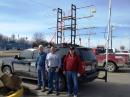
Our team is the self described “OKRover Team”. We do our best to advance VHF Contesting primarily in the state of Oklahoma and the surrounding states. Our team consists of: N0LD-Randy Wing, KB0YHT-Nick Farlow, KC0MTM-Samantha Wing, W0HGJ-Harvey Jones, K5SRT-Sidney “Ross” Terry, K3NT-Bob Kirby, KG9DUK-Alex Naas, and N5ZY-Marcus Sutliff. Our website – www.okrover.info has our bios and pictures of our VHF contest adventures over the years. We have contributed to detailed stories of our adventures primarily in the www.arrl.org soapbox area for the VHF contests. This trip saw the debut of KG9DUK-Alex as a rover and N5ZY-Marcus as a VHF contester!
N5ZY-Marcus had this to say:
"I’ve learned to really appreciate the work it takes to operate and log while moving. I can’t imagine how Coast Guard, Navy, and other CW operators sent code at sea. It is also interesting how the different bands have different levels of background noise. Finally, roving is a bit like radio direction finding, vacation, and contest all in one with periods of nothing counterbalanced by periods of logging swiftly while swaying or bouncing. Now that I’ve experienced this I can speak with experience during our Technician classes or “I have my license, now what?” class. I’m grateful for the experience and to have made my first amateur radio contacts on 6m, 1.25m, 33cm and 23 cm. I will certainly tell my technician classes that VHF/UHF is a world full of possibility awaiting them and they can play in HF as well when or if they upgrade."
Planning
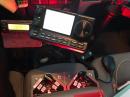
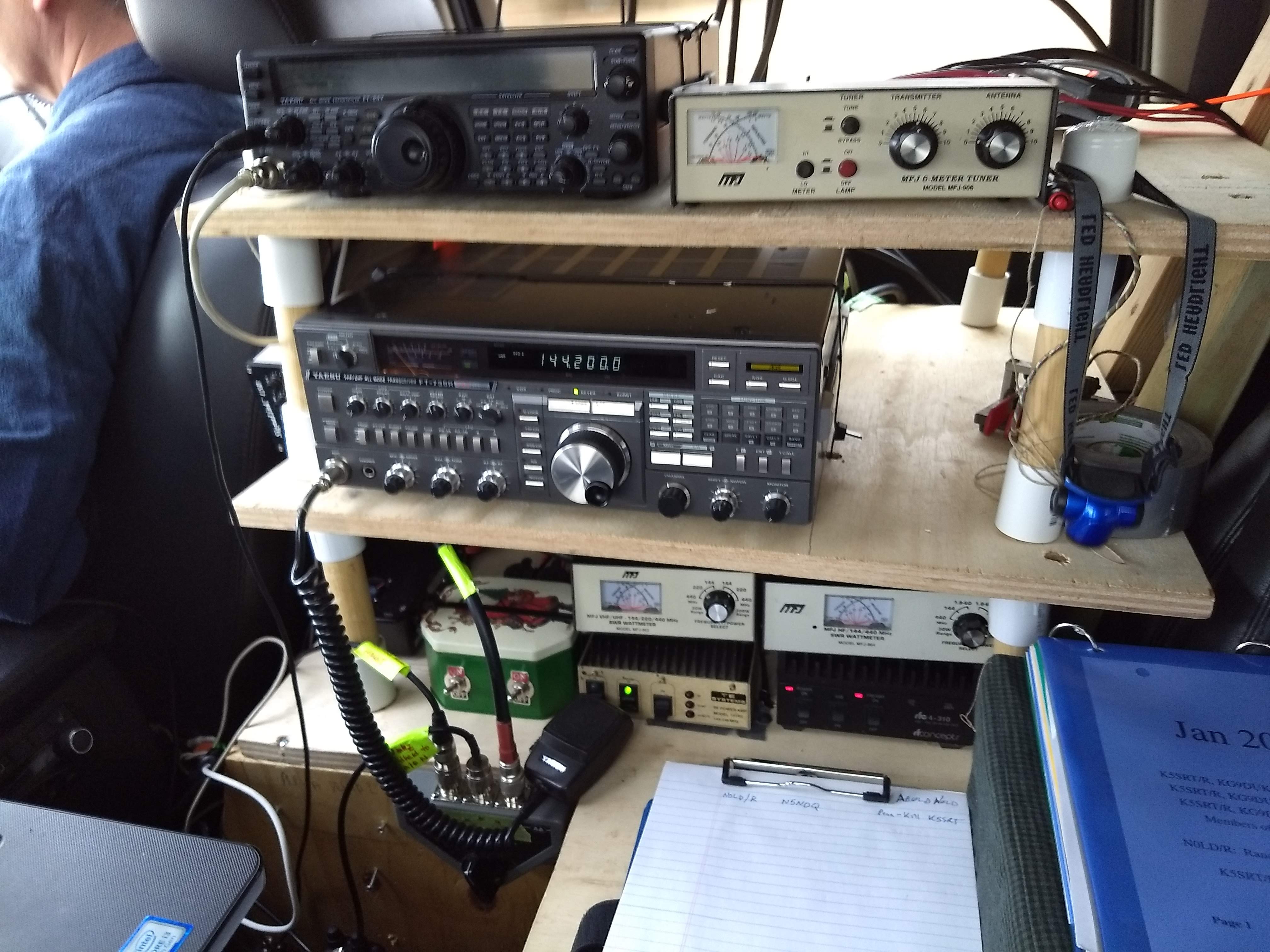
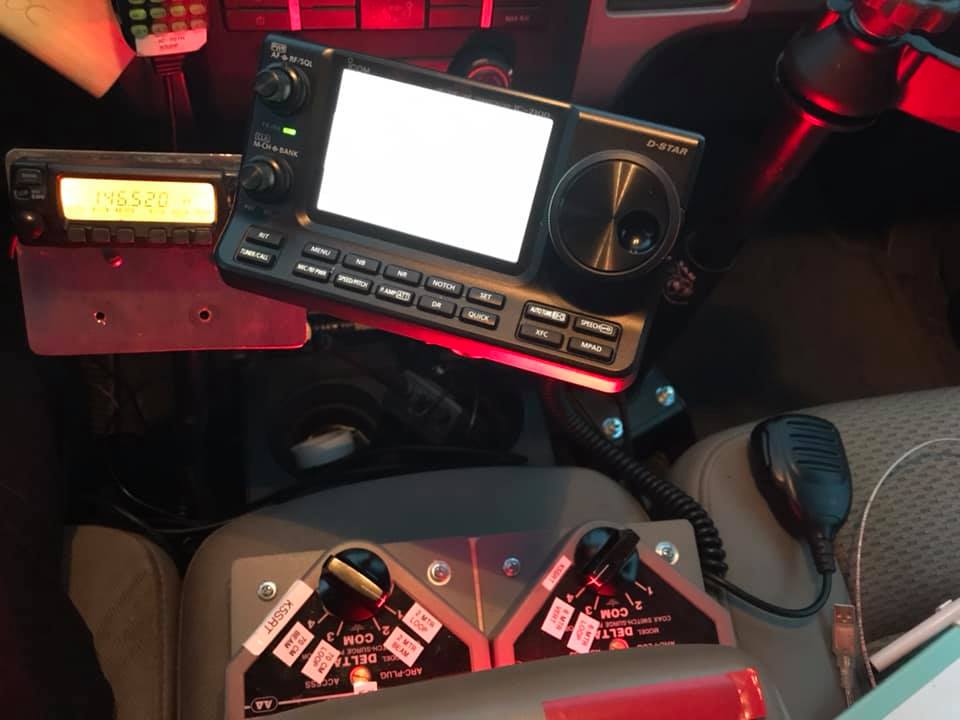
We started planning in October; after a very difficult rove through Kansas and Oklahoma of 7 grid square corners! This was not for the faint of heart and tired us all out to the extent that we agreed not to push this hard again for a while. KG9DUK-Alex was interested in roving in a three vehicle group; N0LD-Randy wanted to operate CLASSIC. We decided that K5SRT and KG9DUK would partner and operate as UNLIMITED ROVER from Greenville, TX north to Tulsa and then back home to Oklahoma City for a total of 2 grid square corners a day. N0LD was going to go through 2 grid square corners but operate CLASSIC Rover. We would meet for the night near Kingston, OK at Ross’s cabin on Lake Texahoma. Over the next 3 months and much of Christmas break, Randy refined our routes, building good maps and contact plans – 74 pages all together. KG9DUK-Alex invested in a 1296mhz Alinco handheld and the correct digital and contesting software. His existing FT-991 would do the lion’s share of the work, but he had a 900 mhz radio, a 2m/70cm mobile FM radio, and a couple of HTs to complement his first rover vehicle setup. KB0YHT-Nick would provide a 900mhz/220mhz Alinco handheld to fillout the missing band. The three rover would meet in Kingston Sunday morning and make a total of 100 of the permitted contacts between non-UNLIMITED rovers. Our team ebbed and flowed in who would be in what vehicle, but as it turned out this discussion was academic.
The Weather
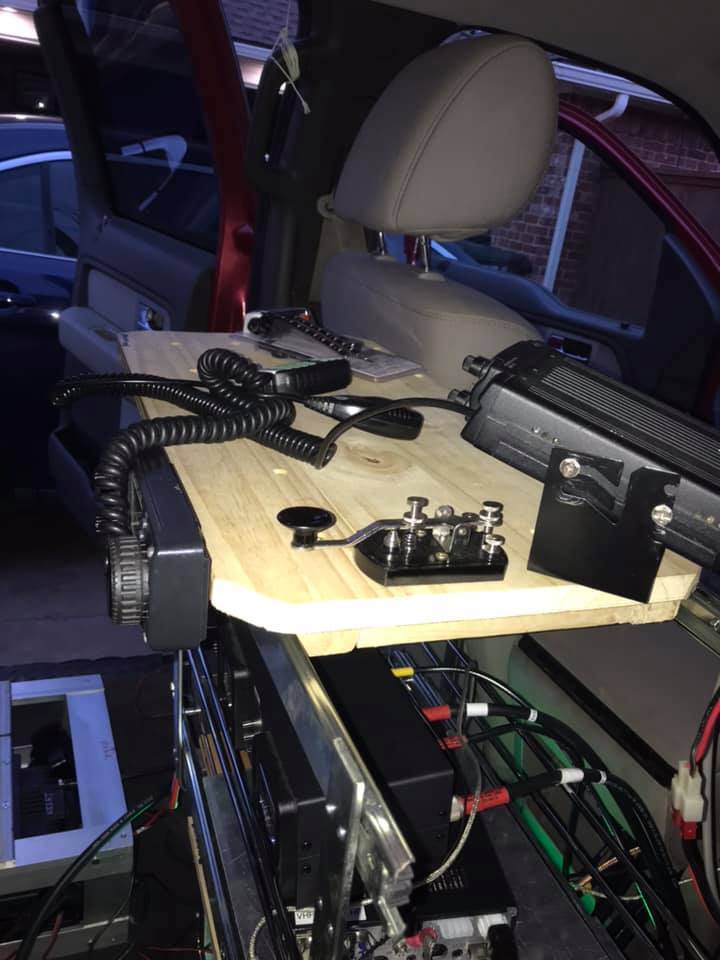
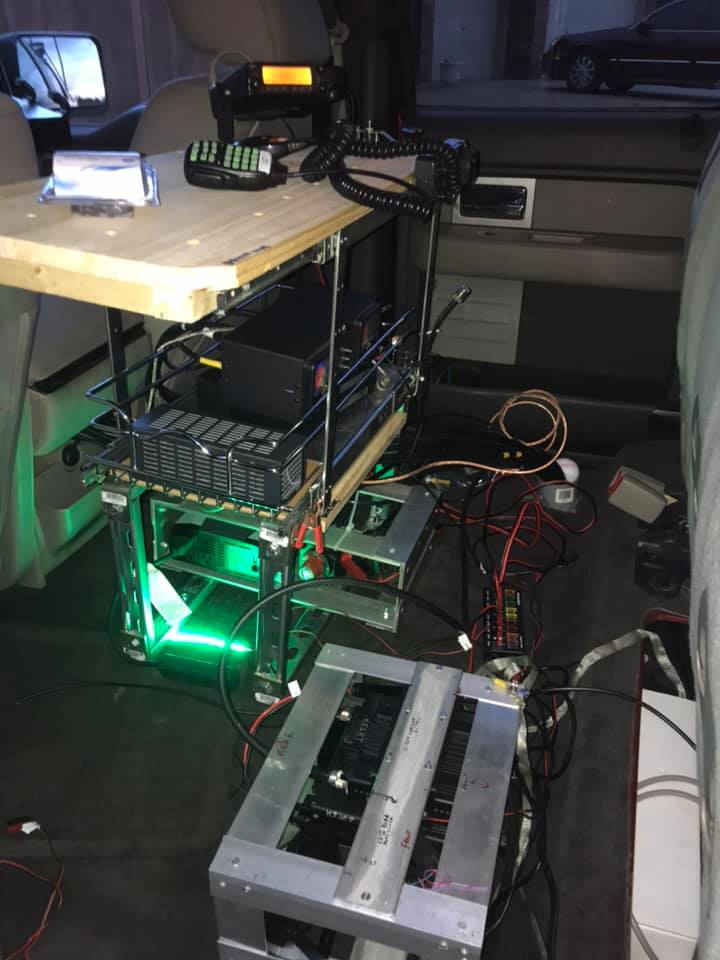
Up to a week before the contest, the weather forecast for the 19-20 Jan 2019 did not look good. Snow, 35-50 MPH wind gusts, and road icing prevailed up until 48 hours prior to the contest. The team decided that discretion was the better part of valor. We decided to all go unlimited and make a 2 rover team through 4 grid square corners. Ross’s work had picked up and he decided to bow out of the upcoming weather. The weather forecast, however, improved a little in the precipitation – no ice or snow – but still 50 mph gusts. The team decided to not return to the original plan. Randy took Friday before the contest off to update the plan and prepare his vehicle for the contest – before the cold front came through. He finished the vehicle outfitting about 1 AM and got some much needed sleep before the contest.
Saturday Morning
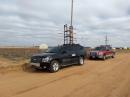
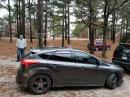
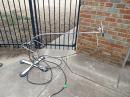
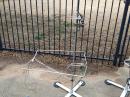
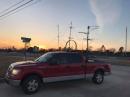
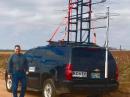
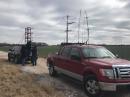
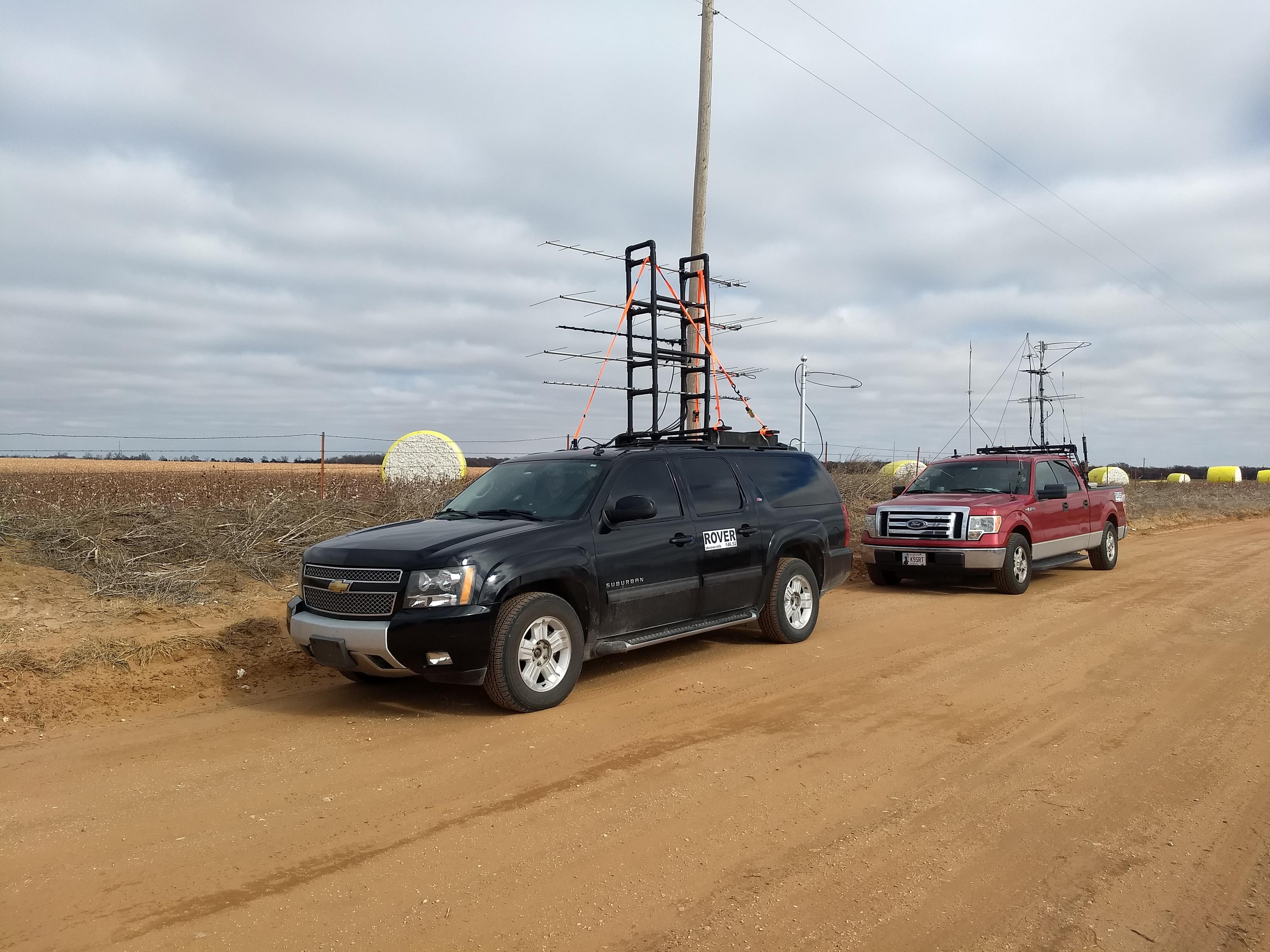
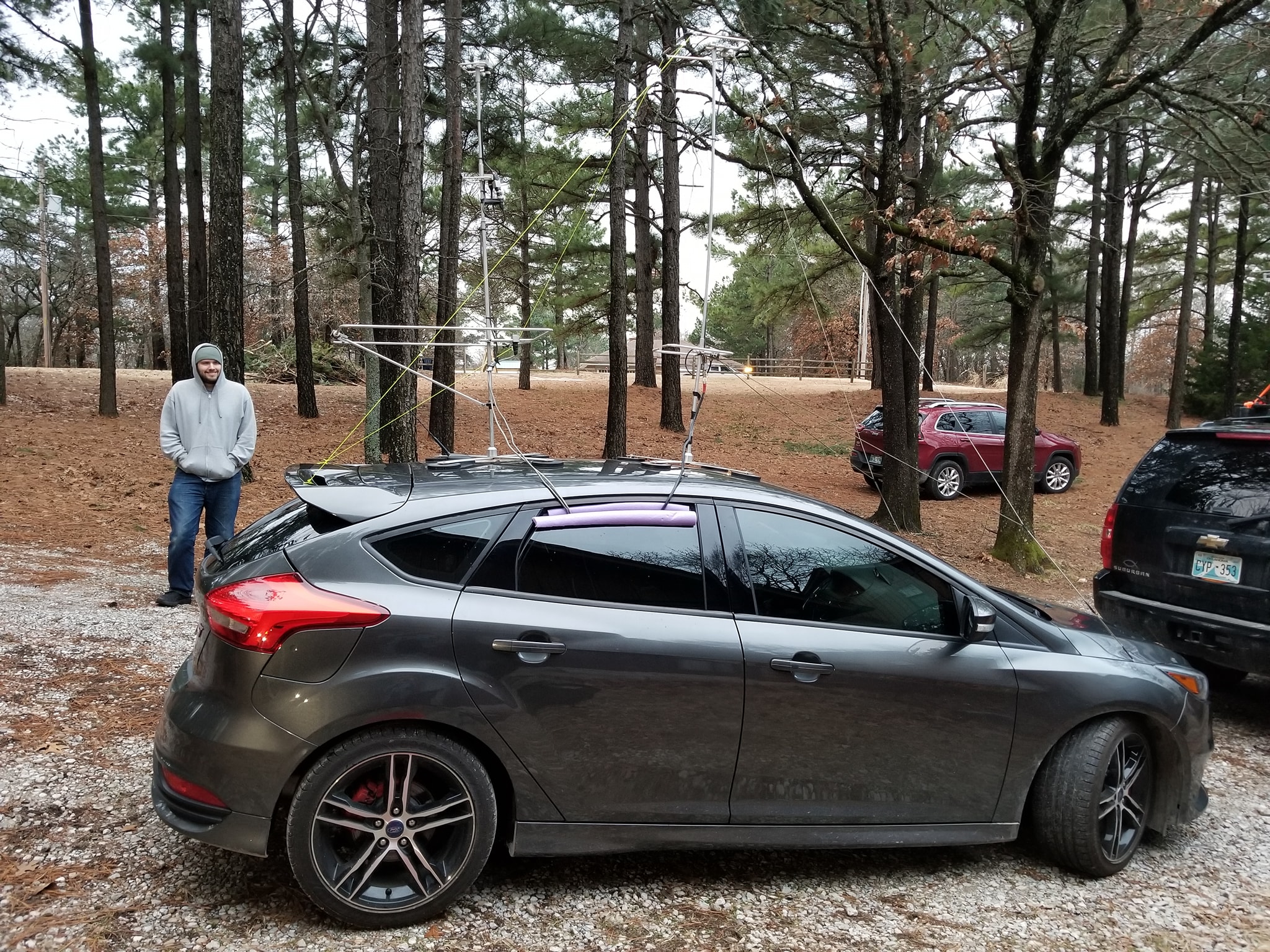
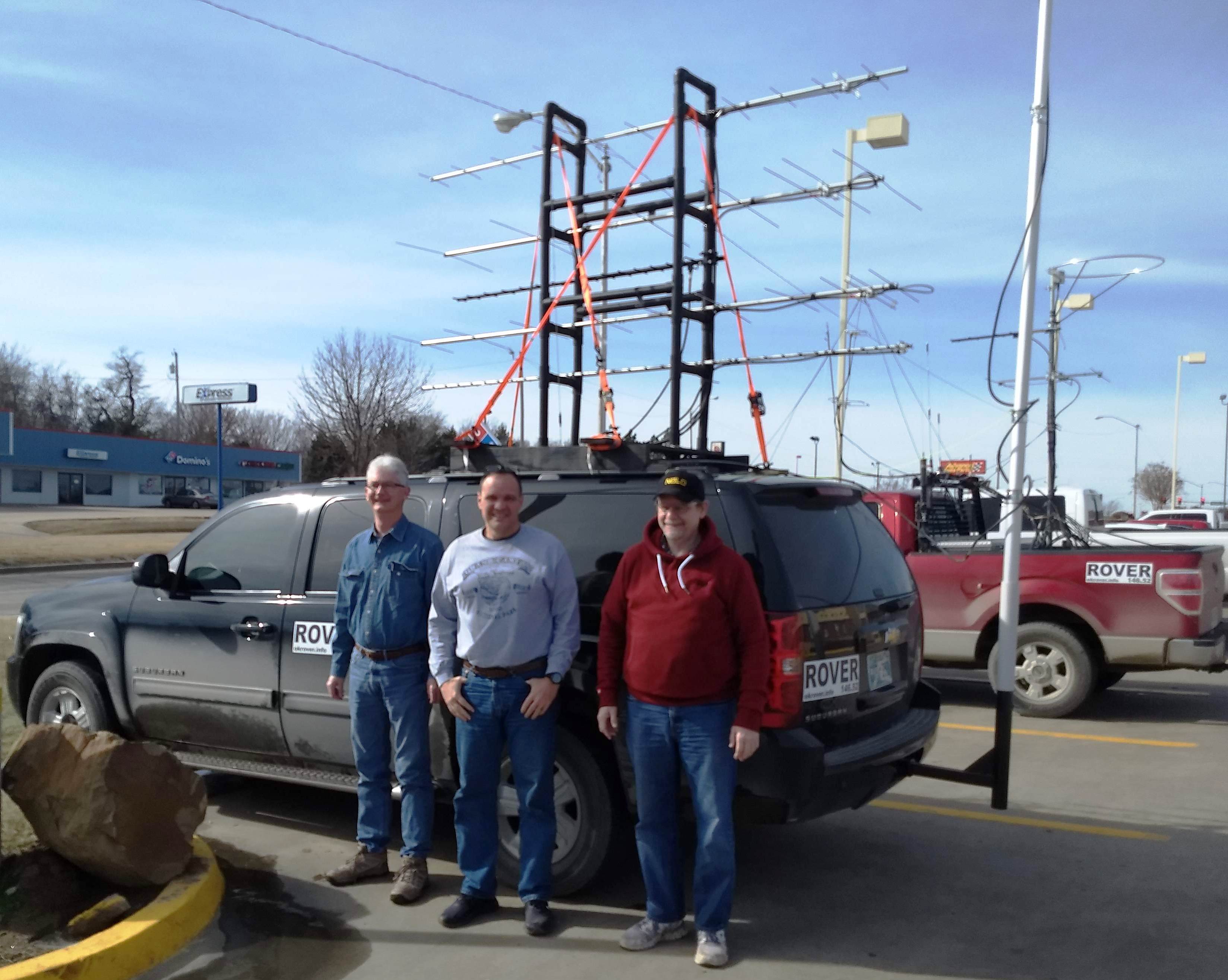
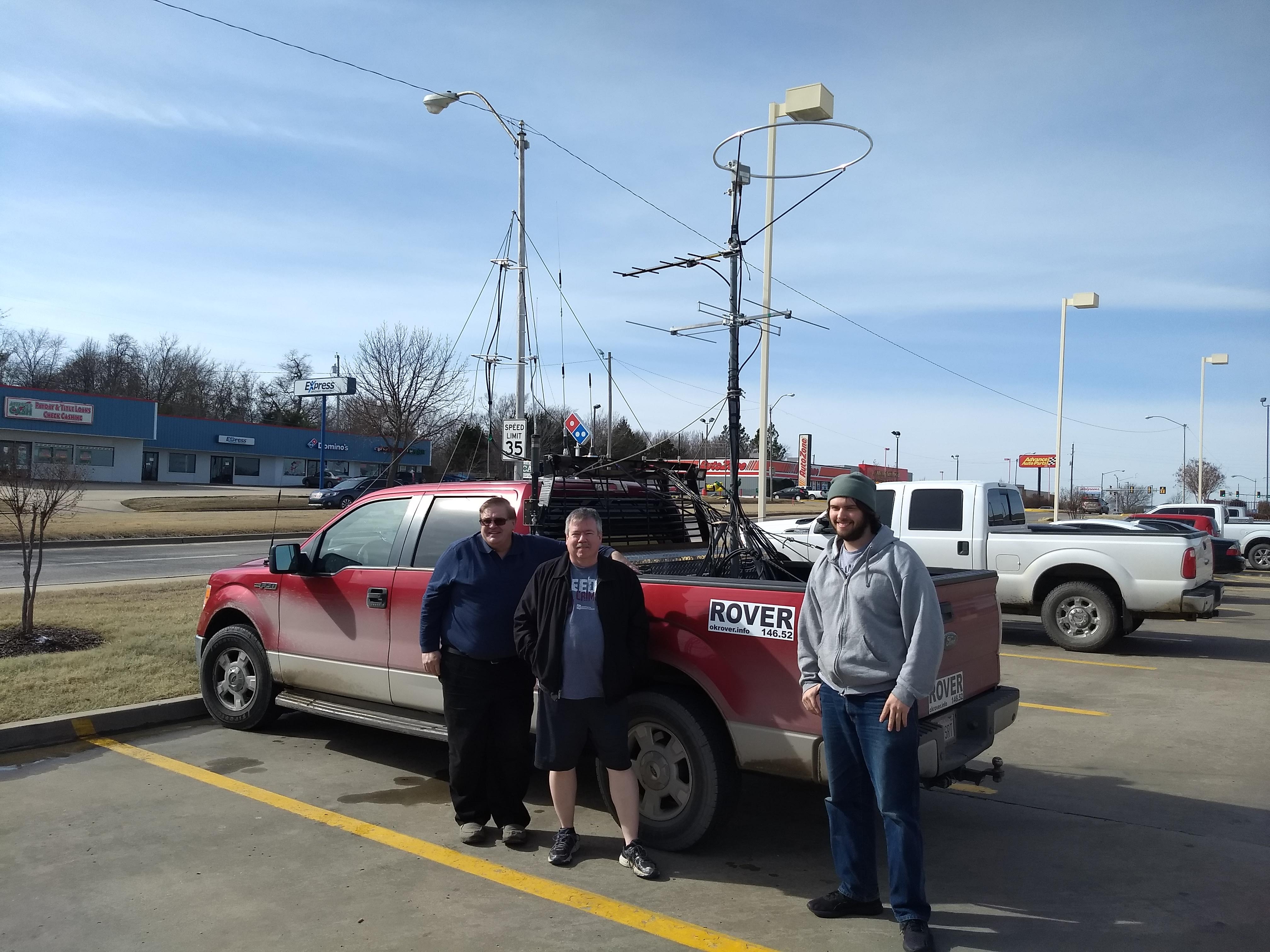
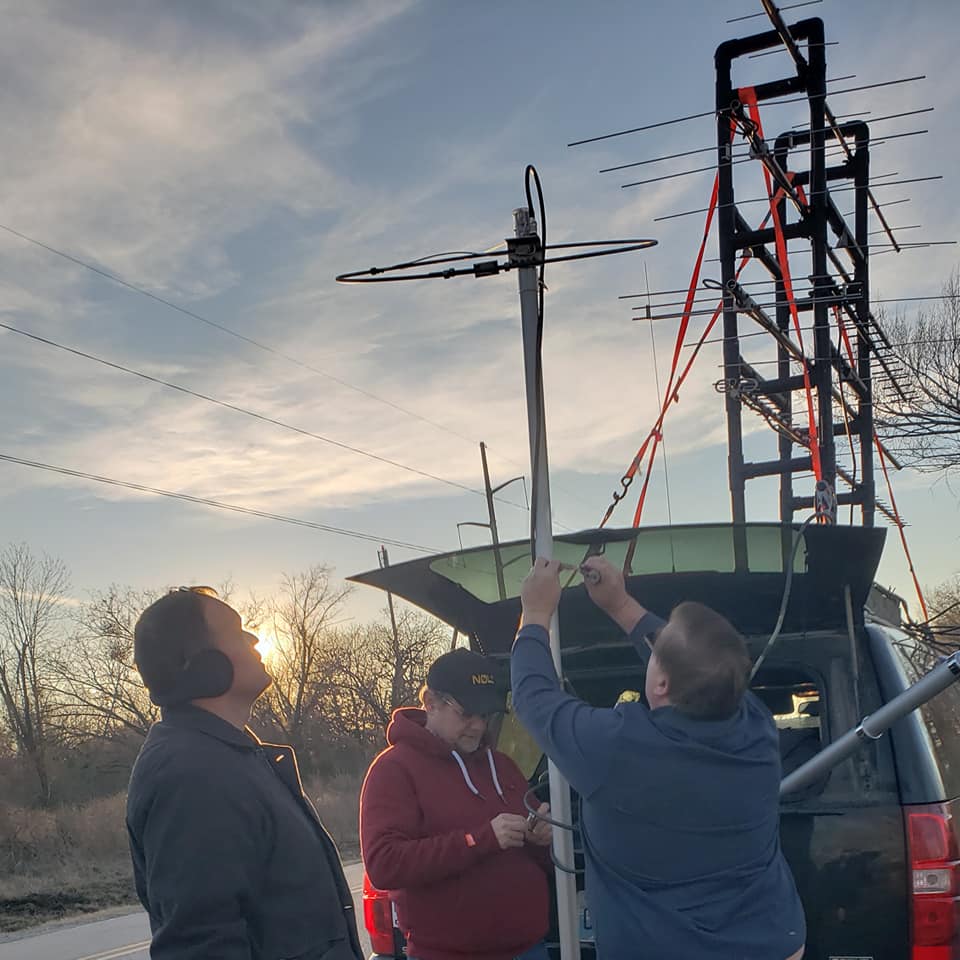
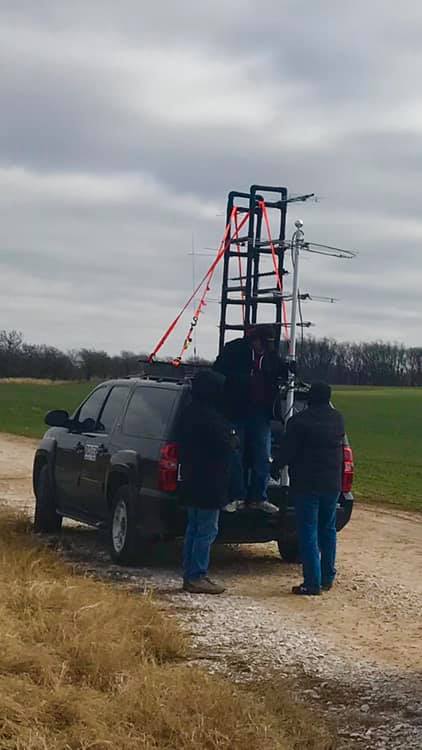
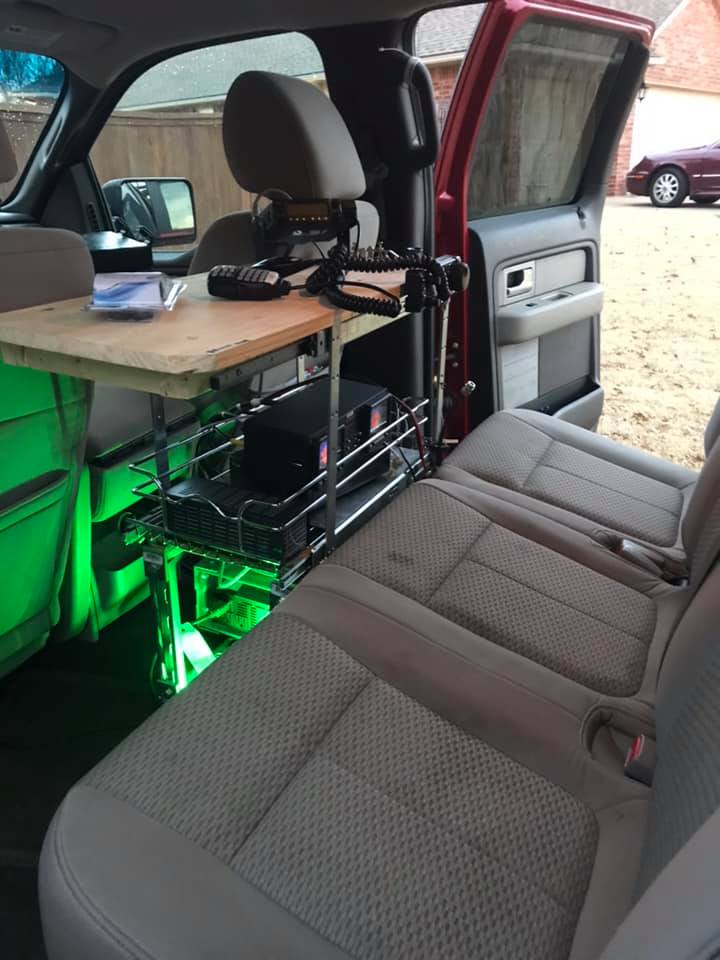
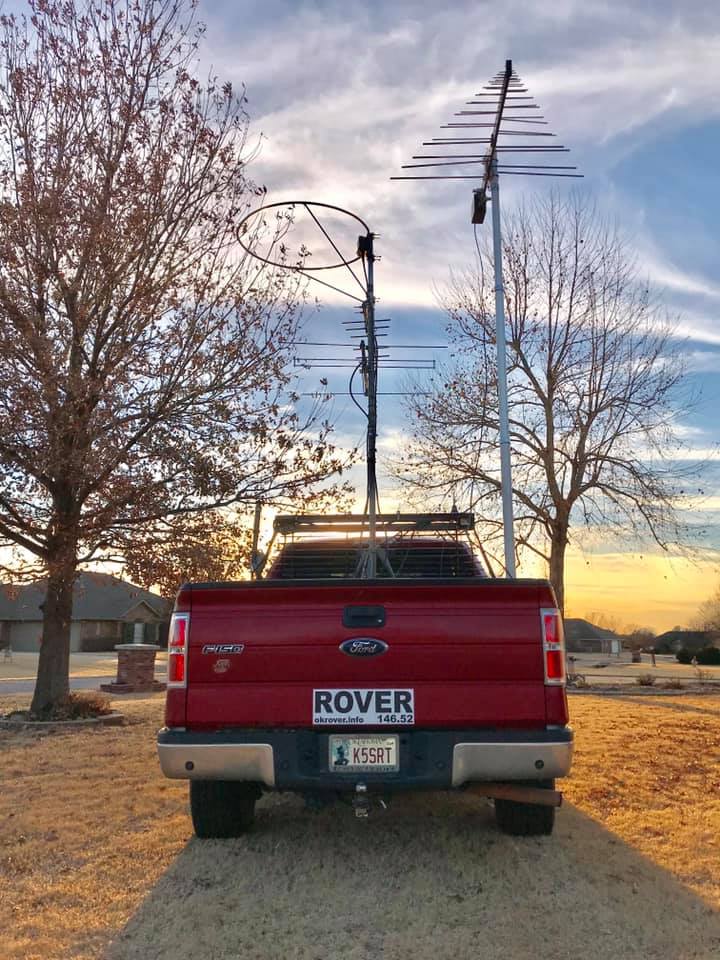
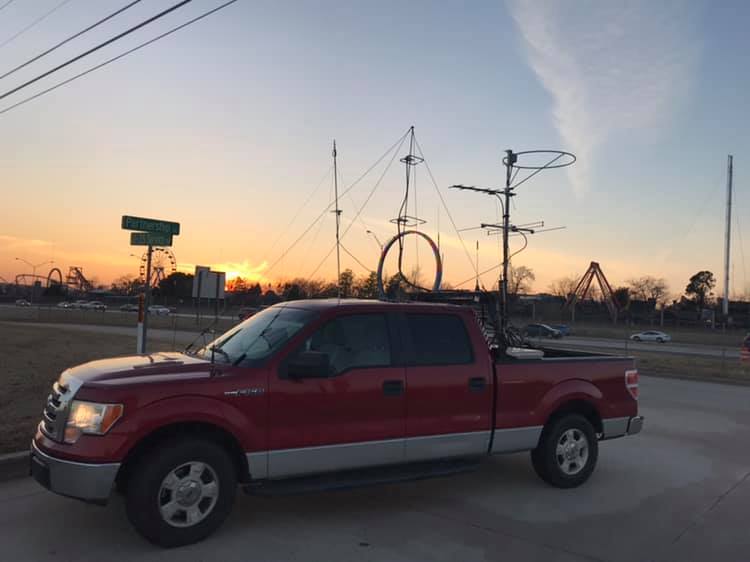
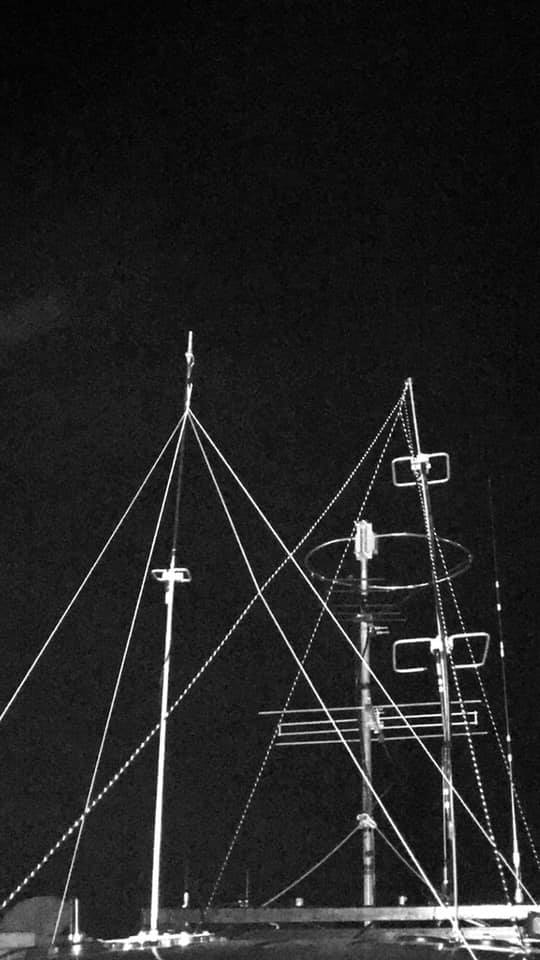
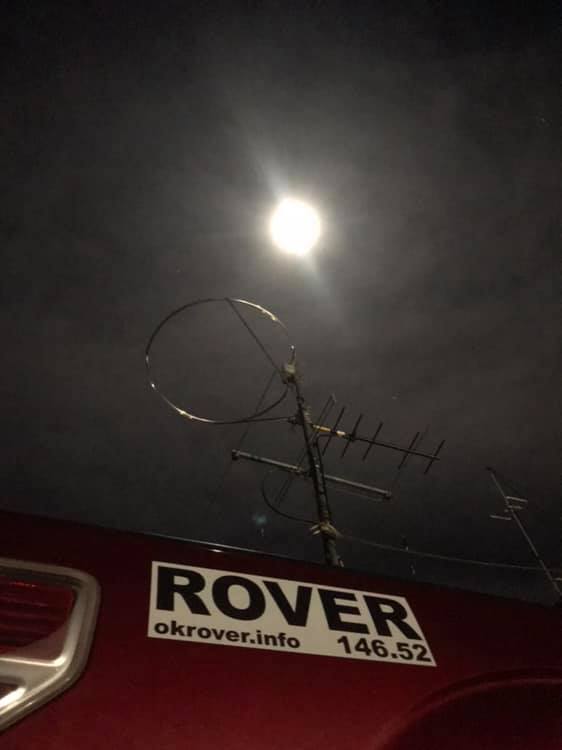
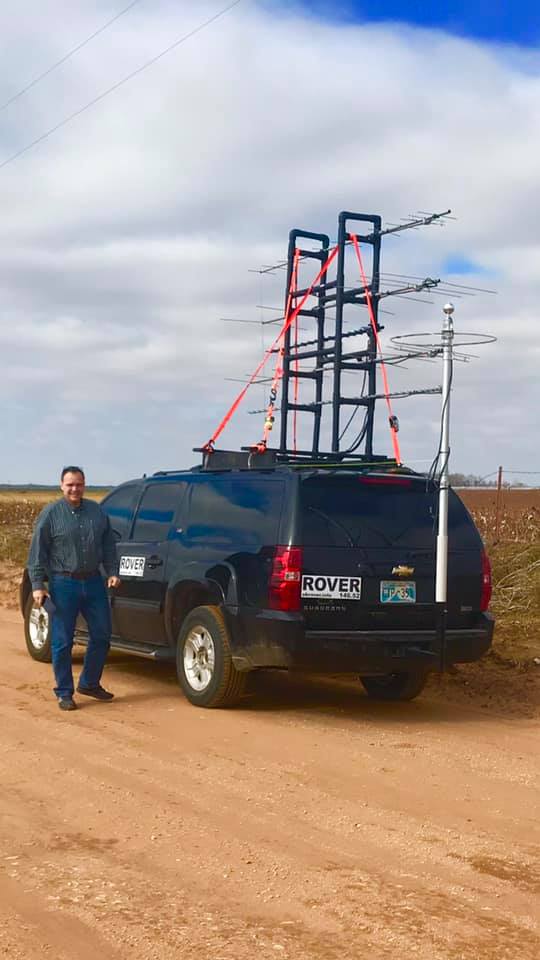
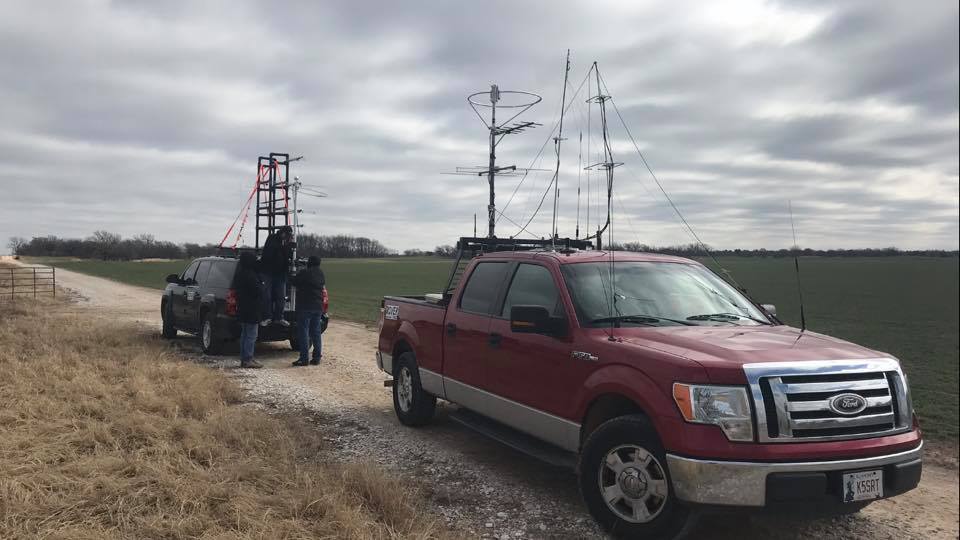
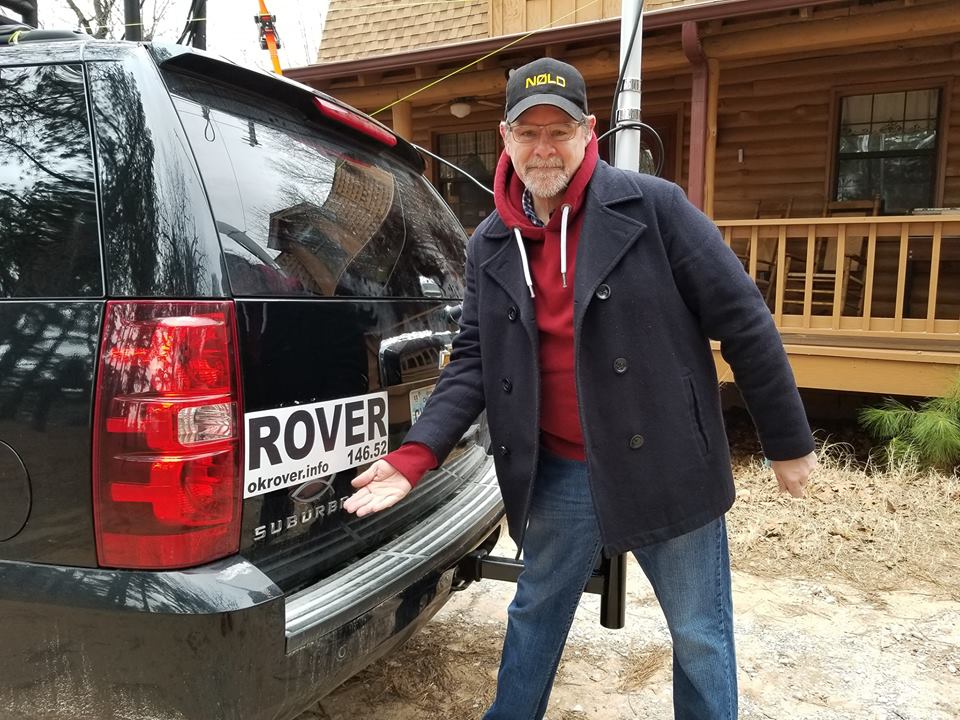
We were all going to rendezvous at Harvey’s house in Edmond at 10 AM. Randy left about 9 AM. Randy got a call from Alex, the loop antennas on 6m, 2m, and 70cm did not survive a 50 MPH gust heading into the wind at 50 MPH on his new rover vehicle – a Ford Focus ST… because of the ample guy lines, the antennas did not fall to the highway, but were hanging off the roof. I drove by and put the antennas into the back of the Suburban-N0LD/r and we continued on the way. After some quick phone calls to the team members and a check of the weather, K5SRT-Ross agreed to combine KG9DUK and his radios into his truck and operate under KG9DUK/r. K5SRT, KG9DUK, and KB0YHT became KG9DUK. N5ZY-Marcus called and wanted to come on Saturday as well as Sunday, so N0LD, N5ZY, and W0HGJ became N0LD/r. Because of the extra one hour pad in our schedule, we were still able to get lunch and arrive at the beginning of the contest at the grid square corner NW of Kingfisher, OK. The broad roof of the Surburan affords many ways to guy our 2” PVC rack of horizontal antennas. Despite heading NW at up to 70 MPH into the 50 MPH gust winds, we did not suffer any damage on our two remaining vehicles. The rest of the day would see our course be mostly southerly before the wind died.
First Grid Square Corner NW of Oklahoma City, OK
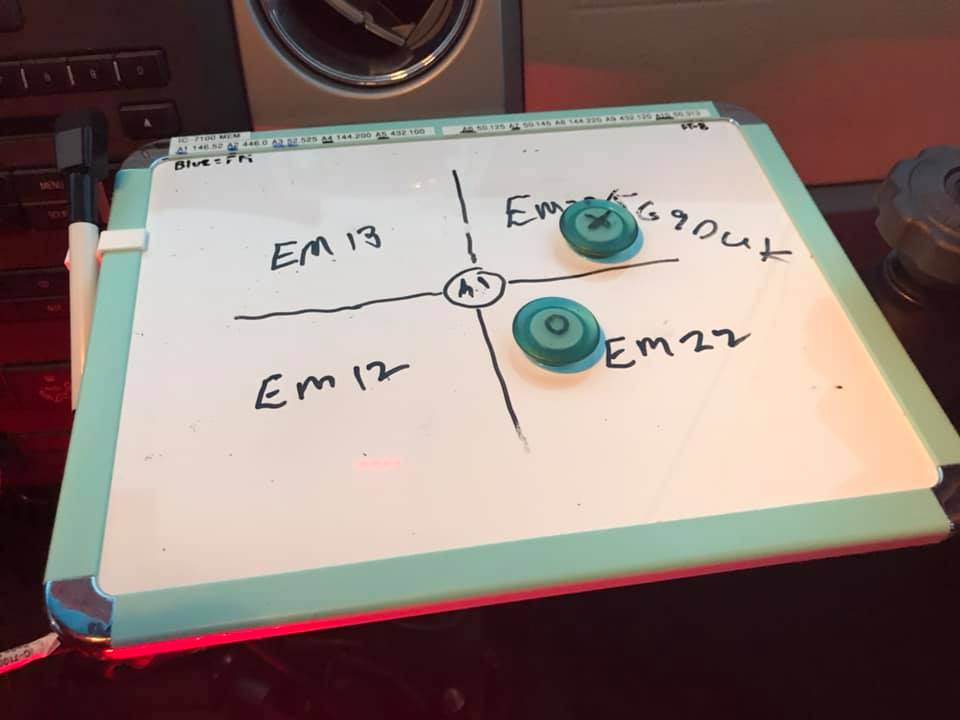
The EM06 portion of the first grid square corner is behind a cattle guard; something the satellite maps did not fully reveal. However, a property renter allowed us to activate that grid square in what we have come to know as the “grid dance”. The route time between all four grid corners was about 12 minutes and we had to do it four times to get the full set of 16 combinations on 6 bands. The three miles separation between the grid square road positions would have been difficult to make on 900mhz and 1296mhz if we had to use just Alinco handhelds and mag-mount verticals. However, N0LD-Randy had a 72” 900 mhz antenna that he employed to help bridge this grid square corner – which was the longest distance we had to bridge on all of the grid square corners. An additional challenge was that the 2 mile long road from the highway to EM06 was frozen red clay with up to 12 inch ruts. We were glad to have a truck and a 4-wheel drive Suburban. We did hear Wichita stations briefly, but we didn’t take the time to work them – we wished we would have…
2nd Grid Square Corner SW of Chickasha, OK
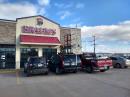
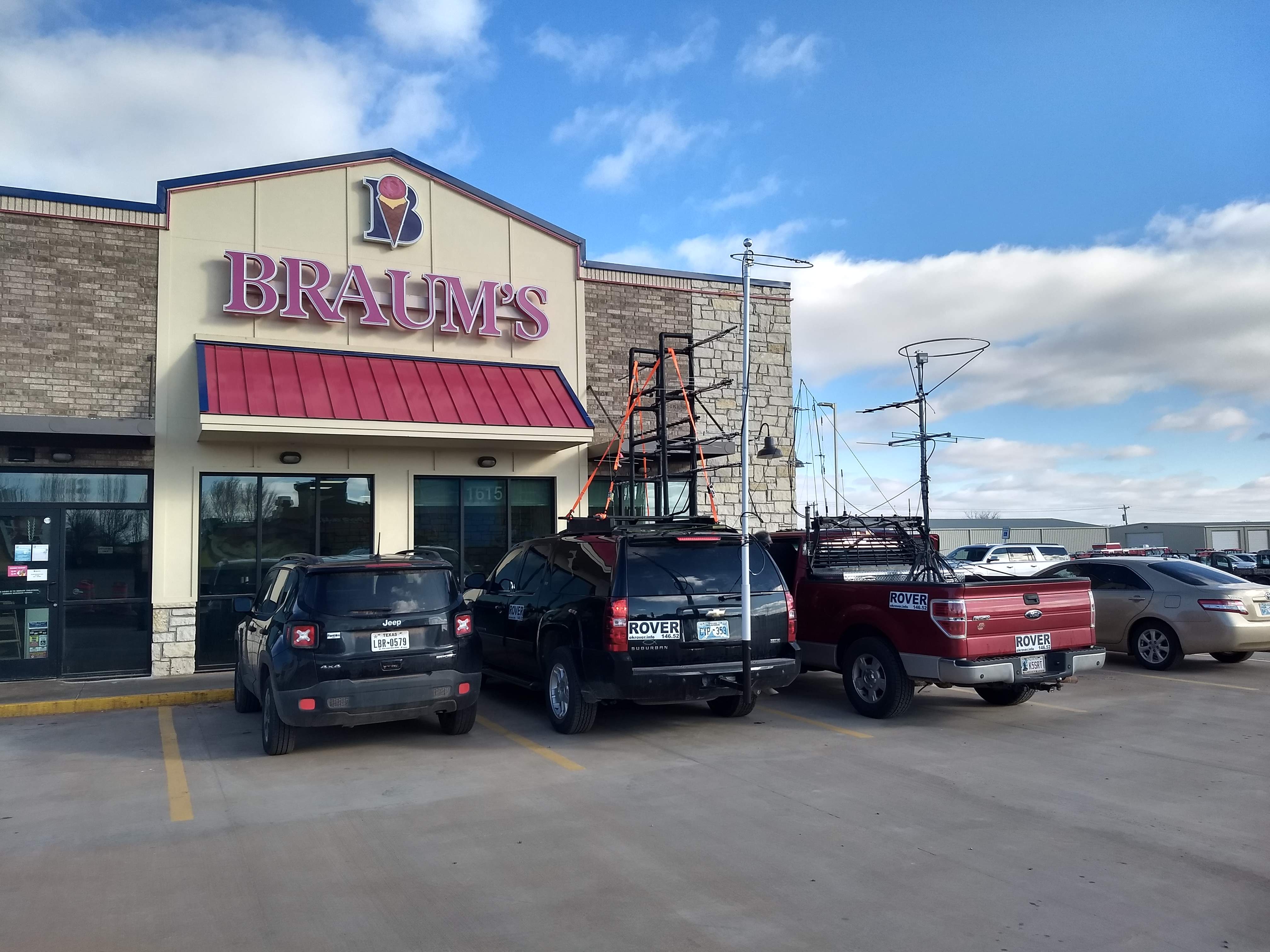
After the 90 minute drive to our 2nd grid square corner, with a short stop at the Kingfisher Braum’s, the sun was in the process of setting around 6 PM. We were able to make a few contacts into EM04. N0LD/r was able to work about 20 miles away on SSB/FM with some 10 ft long gain antennas, there was no 2m opening. N0LD/r was able to work KK5QS-Quincy in all four corners of the grid square on 2 bands. KG9DUK/r struggled to make just one 2m contact with KK5QS-Quincy in Duncan, OK. However, the EM05 location that the team had pre-planned was on a nice hill overlooking the surrounding terrain. As KG9DUK/r continued to work 6m from that hill, N0LD/r decided to forgo Duncan, OK operation and instead headed to a hill west of Riverwind Casino – overlooking Moore and Norman, OK.
6m Opening
KG9DUK’s 6m antenna is higher on theK5SRT vehicle and quickly became the recipient of several cross country contacts into southern California between 0054-0132 (Saturday evening). KG9DUK/r stayed in position while N0LD/r took a restroom break in Chickasha.
Norman, OK and Oklahoma City
As the rovers separated and executed different contact strategies (KG9DUK/r took advantage of their better 6m configuration and N0LD/R took advantage of the early evening FM radio activity in Norman) Dozens of FM and SSB contacts were made on several bands. The N0LD/r team had dinner in Norman about 8 PM; KG9DUK/r team headed home to Edmond and made some additional 6m QSOs along the way.
Sunday Morning
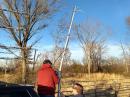
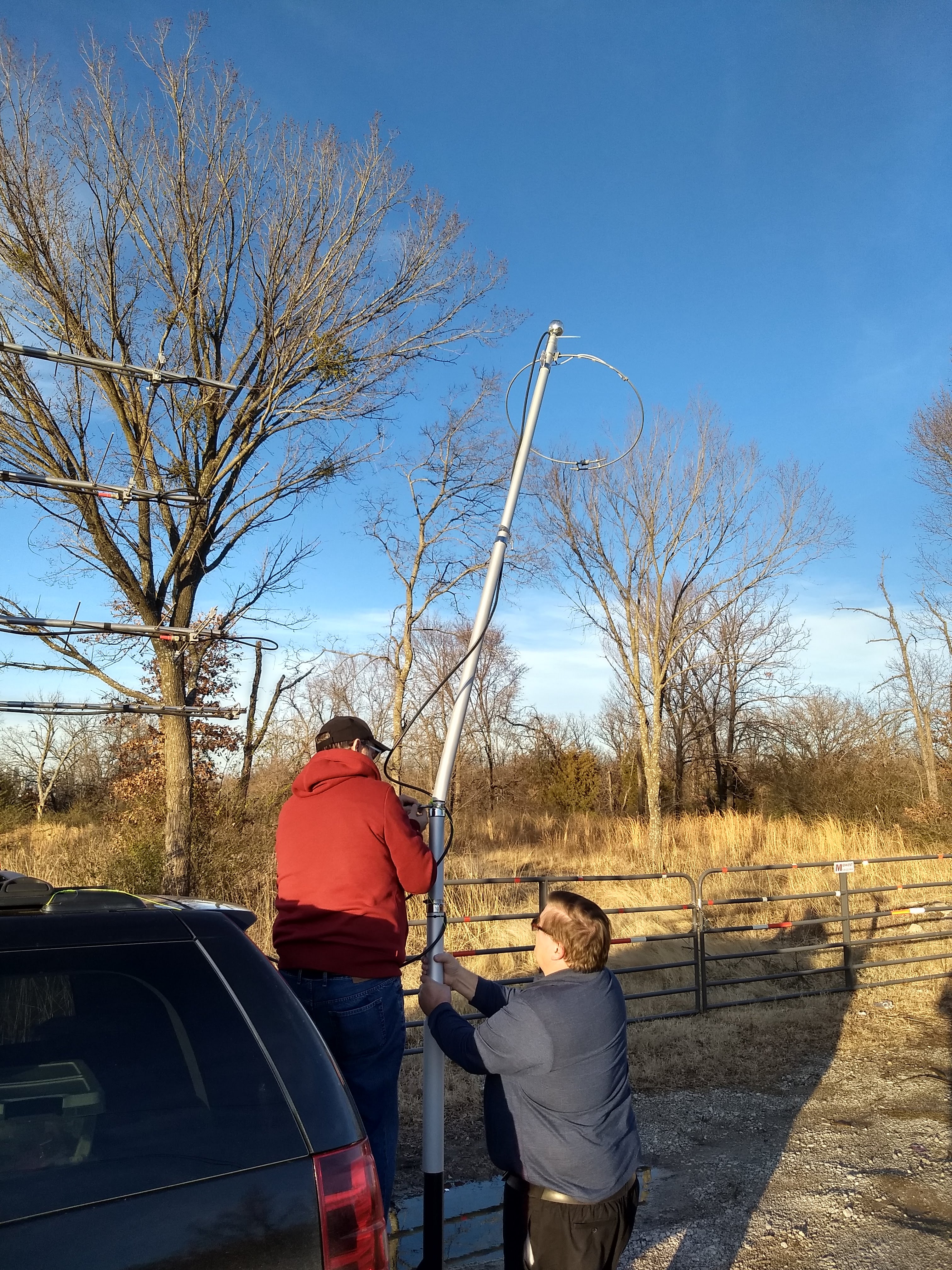
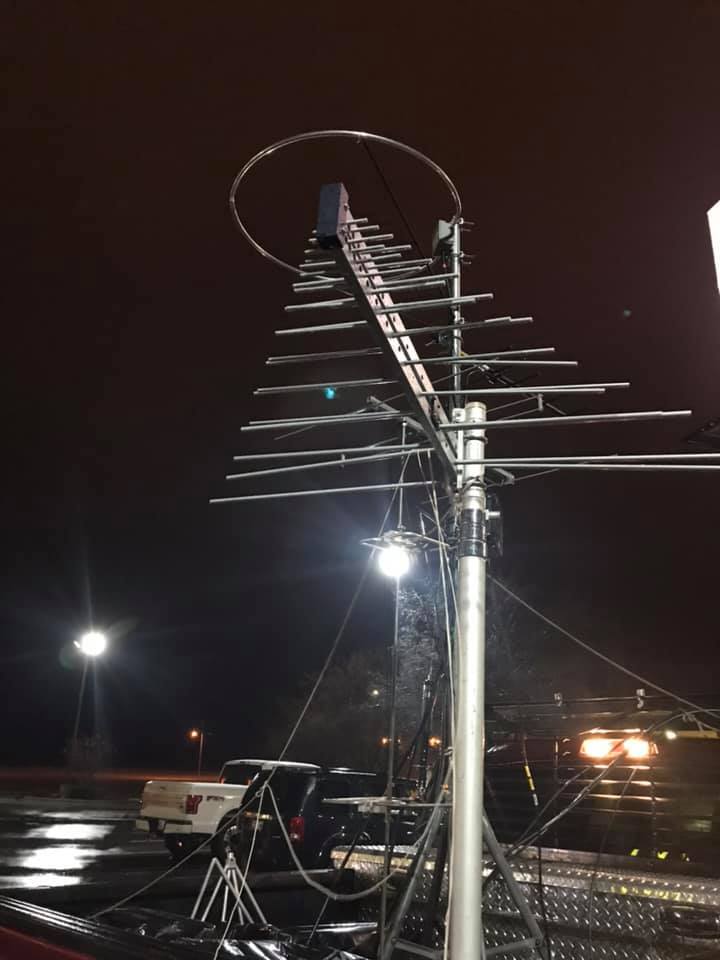
The team was a little late getting started on Sunday morning – an extra half hour to get everyone together and catch a quick drink and meal at McDonalds in rural Choctaw. KG9DUK/r quickly began making early morning 6m QSOs to Florida and eastern OK as we headed to our first grid square corner in SE Oklahoma near McAlester. N0LD/R made one 6m QSO to Florida and a few to eastern OK, but everyone realized that N0LD/r 6m antenna wasn’t cutting the mustard (SWR of 1.7 to 1 and not high enough) The weather was brisk but clear and the wind was a much more manageable 10 mph out of the north. After a brief restroom break and ice-tea fill up in Henryetta, OK at Braum’s, N0LD/R decided he would raise his 6m loop up to 14’ 6”. KG9DUK/r took the lead and radioed back the clearance on the bridges – The bridges along the way were no less than 15’ 6”. We arrived at the first Sunday grid square corner in about 50 minutes.
3rd Grid Square Corner West of McAlester, OK
As the rovers did their grid square corner dance, KC5WX in EM13 picked us on 6m. The news spread and several DFW stations were able to make contact with us on 6m – including two Mexican stations in DL80 and DL81 at 1842-1847 UTC. We continued to make 6m contacts from about 1749-1850 UTC. This was our first operation from this grid square corner. Unfortunately, there are some hills that peak about 150 ft high over the terrain – effectively blocking contacts to the north and the west. These hills would have been excellent operating locations, but they appeared to be on private property and have some treacherous roads. We also spotted several local hunters as we were parked and making contacts – they left us alone and we left them alone. We continued on to Tulsa – about a 90 minute drive – after stopping at where else? Braum’s in McAlester! We decided that we should perhaps rename our trip “Worked all Braum’s” in Oklahoma!
Tulsa, OK
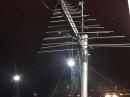
A favorite for the OKRovers is the water tower in Glenpool, OK in EM25. We were able to work easily into Wichita, KS with both rovers. We were also able to pass the word to the locals vehicles via repeaters (and our GPS location on our web page) and we made contact before the football games began late Sunday afternoon! We have a nice Tulsa grid square corner map that is only about 3/4ths of a mile long. We can work all the intra-vehicle contacts in that grid in about 50 minutes. Unfortunately, it is low as far as terrain – so we didn’t make as many FM contacts there… However, when we headed up to the top of “Turkey Mountain” in SW Tulsa, N0LD/r was able to make contact with the Wichita and both KG9DUK and N0LD were able to make contact with the local stations. However, the VHF propagation did not favor KG9DUK’s smaller antennas, they weren’t able to make the contacts that N0LD/r could with the larger antennas. As N0LD pulled out of EM26 on Turkey Mountain, he didn’t lower his 6m antenna and the top of the mast caught a branch, bending the mast a little. We broke off the lower portion and was still able to get the 6m antenna up to about 13 ft. In the haste to fix the antenna while there was still light, we forgot to make contact with the VHF hams in Wichita from the Turkey Mountain EM16 location.
Oklahoma City, OK
We stopped at Stroud, OK at the truck stop for some McDonalds and team conversation. We sent the northern OKC team members home in K5SRT’s vehicle and Alex and Randy went home in N0LD’s vehicle.
Scores
|
N0LD
|
||||
|
407
|
831
|
64
|
9
|
60,663
|
|
QSOs
|
Points
|
Dest Grids
|
Source Grids
|
Score
|
|
KG9DUK
|
||||
|
353
|
753
|
68
|
9
|
57,981
|
|
QSOs
|
points
|
dest grids
|
source grids
|
score
|
|
Comparison
|
||||
|
54
|
78
|
-4
|
0
|
2682
|
-----------------------------------------------------------------
|
KG9DUK
|
N0LD
|
comparison
|
||||
|
6m QSOs
|
84
|
6m QSOs
|
83
|
-1
|
||
|
6m Grids
|
21
|
6m Grids
|
15
|
-6
|
||
|
2m QSOs
|
65
|
2m QSOs
|
96
|
31
|
||
|
2m Grids
|
10
|
2m Grids
|
11
|
1
|
||
|
1.25m QSOs
|
49
|
1.25m QSOs
|
54
|
5
|
||
|
1.25m Grids
|
9
|
1.25m Grids
|
10
|
1
|
||
|
70cm QSOs
|
57
|
70cm QSOs
|
76
|
19
|
||
|
70cm Grids
|
10
|
70cm Grids
|
10
|
0
|
||
|
33cm QSOs
|
49
|
33cm QSOs
|
49
|
0
|
||
|
33cm Grids
|
9
|
33cm Grids
|
9
|
0
|
||
|
23cm QSOs
|
49
|
23cm QSOs
|
49
|
0
|
||
|
23cm Grids
|
9
|
23cm Grids
|
9
|
0
|
Lessons Learned
1. N0LD-Randy and KG9DUK-Alex learned that high winds and low roof area / high profile magnetic mount antennas don’t work went in 50 MPH gust winds.
2. N0LD-Randy learned that you should never say “1.7 SWR is acceptable” on a 6m loop. Clearly, KG9DUK’s 6m configuration was superior by at least 3 db.
3. Both teams agree that having a vertical 6m antenna tied to a separate radio would be good for intra-vehicle communications and to monitor E-Skip. That way, the horizontal 6m antenna could still be used for 6m digital or pressed into horizontal voice activity when needed.
4. UNLIMITED rover is useful for introducing a ham to VHF contesting!
5. N0LD-Randy learned to lower his 6m antenna while driving under trees.
6. If KG9DUK/r would have worked just 4 more 6m grid squares, they would have beat N0LD/r! The long boom yagis gave N0LD/r several more 2m, 1.25m, and 70cm contacts than KG9DUK/r to make up their 6m grid advantage.
-- N0LDPhoto Gallery
-
 Start of the cont...
-
-
 After the wind go...
-
 After the wind go...
-
-
-
-
-
-
-

-
-
 KG9DUK Rover fron...
-
-
-

-
-
-
-
-
-
-
-
-
-
-
Back