Produced by the Radio Society of Great Britain.
See Conditions of Use before downloading.
Download the Video
What is Ham Radio?
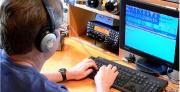
Amateur Radio (or lovingly called ham radio) involves people communicating with each other on specific radio frequencies designated just for Hams (or the people who participate in Amateur Radio). You can try sending and receiving voice, image or morse code (CW) between others from across town, across the world and even into space! The hobby combined technology, electronics and communication in unique and sometimes surprising ways! No cellphones or internet access required.
Amateur Radio contains so many different niches with an undeniable STEM foundation at its core. Exploring our website is a great way to see what area of the hobby piques your interest most. All Ham operators gain a basic knowledge of radio technology and operating principles and must pass an examination for the FCC Technician license to operate on radio frequencies known as the "Amateur Bands." The Education Department works to provide the resources needed by the community. You can study for a license test with books or digital tools, refresh your radio knowledge with online courses hosted on our Learning Center and expand America’s view of how much Ham radio can do for future generations through the Education and Technology Program.
Fun Fact: You can set up a ham radio station anywhere! Come learn more about this ever-evolving activity that began over 100 years ago. Click "A Ham History" or "Ham Radio Glossary" subsections to read more!
FAQs
-
Why are Amateur Radio Operators also called "Hams"?
The first wireless operators were landline telegraphers who left their offices to go to sea or to man the coastal stations. They brought with them their language and much of the tradition of their older profession. In those early days, every station occupied the whole spectrum with its broad spark signal. Government stations, ships, coastal stations and the increasingly numerous amateur operators all competed for time and signal supremacy in each other's receivers. Many of the amateur stations were very powerful. Two amateurs, working each other across town, could effectively jam all the other operations in the area. Frustrated commercial operators would refer to the ham radio interference by calling them "hams." Amateurs, possibly unfamiliar with the real meaning of the term, picked it up and applied it to themselves. As the years advanced, the original meaning has completely disappeared.
-
What's the Appeal of Ham Radio?
You can communicate from the top of a mountain, your home or behind the wheel of your car, all without relying on the Internet or a cell phone network You can take radio wherever you go! In times of disaster, when regular communications channels fail, hams can swing into action assisting emergency communications efforts and working with public service agencies. For instance, the Amateur Radio Service kept New York City agencies in touch with each other after their command center was destroyed during the 9/11 tragedy. Ham radio also came to the rescue during Hurricane Katrina, where all other communications failed, and the devastating flooding in Colorado in 2013.
You can communicate with other hams using your voice and a microphone, interface a radio with your computer or tablet to send data, text or images, or Morse code, which remains incredibly popular. You can even talk to astronauts aboard the International Space Station, talk to other hams through one of several satellites in space, or bounce signals off the moon and back to Earth!
Some hams like to build and experiment with electronics. Computer hobbyists enjoy using Amateur Radio's digital communications opportunities. Others compete in "DX contests," where the object is to see how many hams in distant locations they can contact. Mostly we use ham radio to form friendships over the air or through participation in one of more than 2000 Amateur Radio clubs throughout the country. There are over 600,000 radio amateurs in the United States and over 2,000,000 worldwide.
Read real person comments in "Why I Love It!"
-
Amateur Radio operators come from all walks of life -- doctors, students, kids, politicians, truck drivers, movie stars, missionaries and even your average neighbor next door. They are of all ages, sexes, income levels and nationalities. Whether through Morse Code on an old brass telegraph key, voice communication on a hand-held radio or computerized messages transmitted via satellite, all hams use radio to reach out to the world.
Learn More -
Before you can do anything, you need to get an Amateur Radio license from the Federal Communications Commission.
Once you have your license, the rest is up to you. What you do next depends on what sort of equipment you intend to use and what type of communication you'd like to try. Find helpful advice for your first ham station and how to get on the air and be sure to join ARRL to take advantage of the numerous membership benefits, including technical support from our Technical Information Service. -
Amateur Radio operators must be licensed by the FCC before transmitting on amateur frequencies. Licensing helps ensure that operators understand the basic rules, operating practices, and safety principles needed to use the radio spectrum responsibly.
Your license also determines which frequencies and operating privileges you may use. As you advance through the Technician, General, and Amateur Extra license classes, you gain access to additional frequencies and operating opportunities.
The licensing system helps amateur operators share the spectrum efficiently, reduce harmful interference, and operate safely and legally.
-
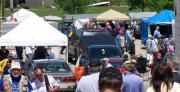
Basic study materials for passing the FCC test and getting your initial license usually cost less than $40. There are also classes held by many local groups for people who want more interaction. Once you have your first license, most hams find it best to start with simple equipment and grow over time. It usually costs less than $200 to get your own first radio and start talking to other hams. Many ham radio flea markets are held all over the country that sell good used equipment for even less.
-
Do I Have to Learn Morse Code?
While many hams like to use morse code, it is not required.
Learn More -
What are the Amateur Radio Bands?
Look at the dial on an old AM radio and you'll see frequencies marked from 535 to 1605 kilohertz. This is one radio "band." There are other bands of radio spectrum for amateur, government, military and commercial radio uses. If you could hear the many different bands, you would find aircraft, ship, fire and police communication, as well as "shortwave" stations, which are worldwide commercial and government broadcast stations from the U.S. and abroad. Amateurs are allocated 26 bands (i.e., specific groups of frequencies) spaced from 1.8 Megahertz, which is just above the broadcast radio frequencies, all the way up to 275 Gigahertz! Depending on which band we use, we can talk across town, around the world or out to satellites in space. Hams can even bounce signals off the moon!
-
What are Some of the Other Ways Radio Hams Communicate?
There is a great variety of ways that Amateur Radio operators are able to communicate. Using voice is just one. Morse code is still widely used. Packet, Radio Teletype (often called Ritty), and PSK are three more ways to communicate. Newer modes such as FT-8, FT-4, and JS8Call are heavily used today. Even faster transmissions are being developed using methods which can send almost any form of digital data. Hams also use television to send pictures over the air.
-
Whether you're new to ham radio or an experienced ham, there are many ways you can get involved with this hobby and service. Visit the Get Involved area of our site to check out how you can get involved.
Learn More -
Founded in 1914, the American Radio Relay League is the national association for amateur radio in the US. Today, with more than 161,000 members, ARRL is the largest organization of radio amateurs in the United States and the primary source of information about what is going on in the ham radio world. ARRL offers books, news, support, information, special operating events, continuing education classes and other benefits for its members. Being a member of ARRL is a huge benefit for hams.
-
Where Can I Get More Information?
The best ways to learn about Amateur Radio is to talk to hams face-to-face. Hams take pride in their ability to "Elmer" (teach) newcomers the ropes to get them started in the hobby. There is probably an Amateur Radio club near you that will welcome your interest.
You can also give us a call at 1-800-32-NEWHAM.